
Tenki Code Reviewer
The code reviewer
your agents can't outrun.
Reviews every change and flags real bugs before merge, on GitHub and Cursor Origin.
No credit card required · Start in under 2 min
Companies deploy faster with Tenki









Benchmarks
Tenki vs. 6 leading AI reviewers on 122 real production bugs,
scored by a 3-LLM judge panel.



Don't believe it? See the full testing methodology.
View Benchmark ReportCapabilities
Every PR reviewed before
your coffee gets cold.
Automated PR reviews
Make your development process faster by letting AI review your team’s pull requests.

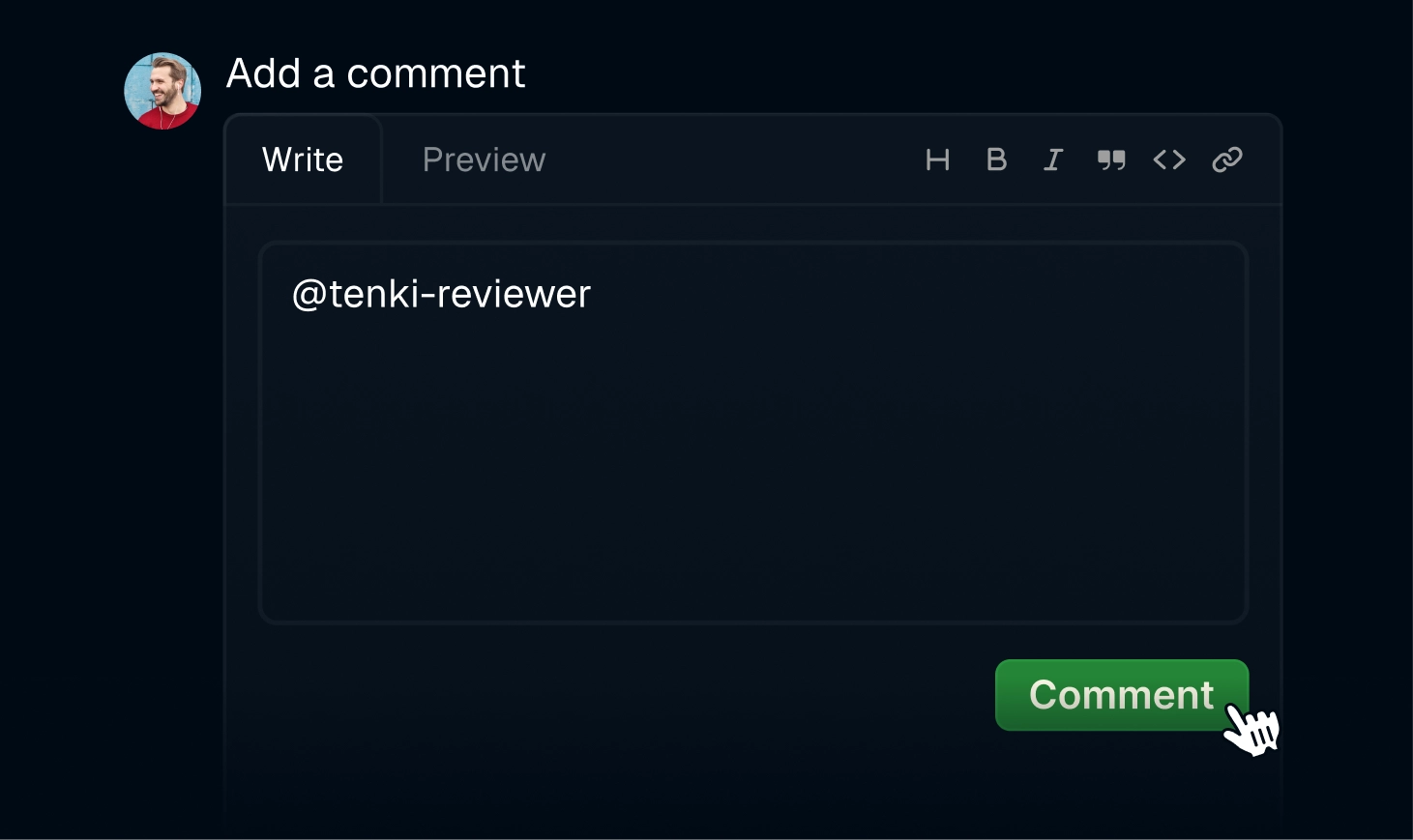
Comment to get ad-hoc reviews
Tag @tenki-reviewer in a pull request within any connected repository to trigger it.
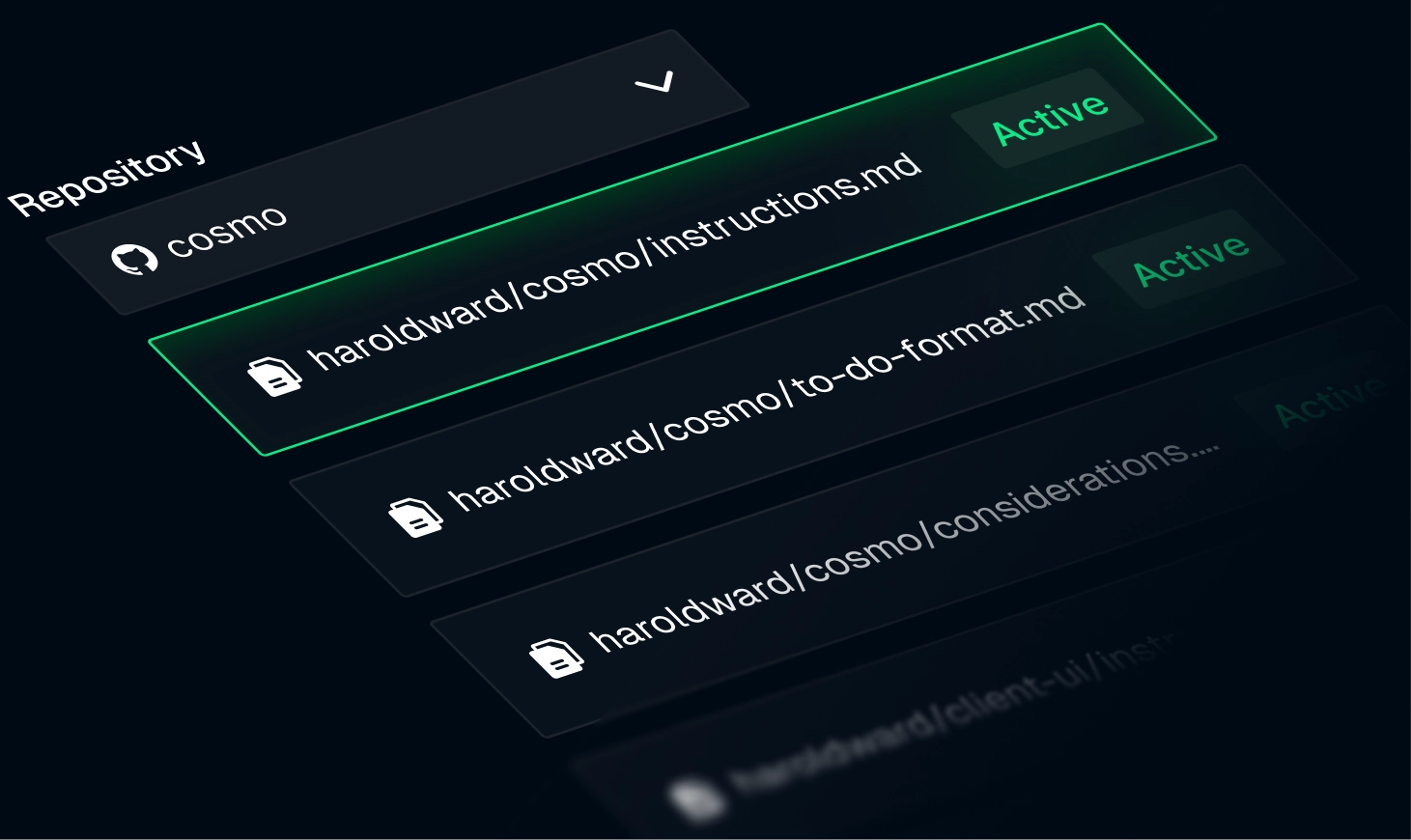
Follows custom context
Reads your repository’s AGENTS.md or CLAUDE.md so reviews match your team’s codebase.
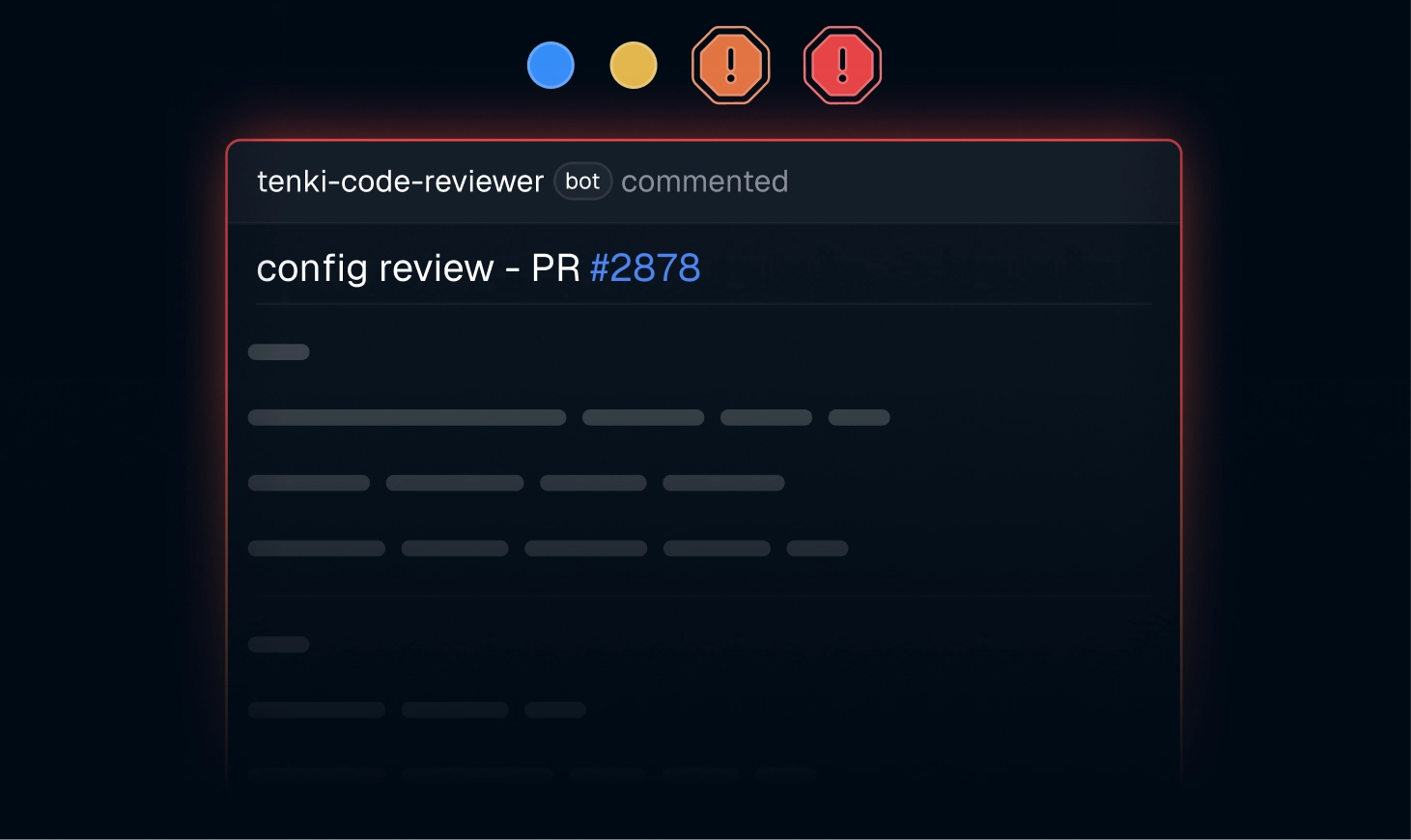
Fine-tuned to your team’s desire
Customize the Code Reviewer to target issues from low to critical severity.
Quick setup
Everything ready to go in under 2 minutes without any setup changes.

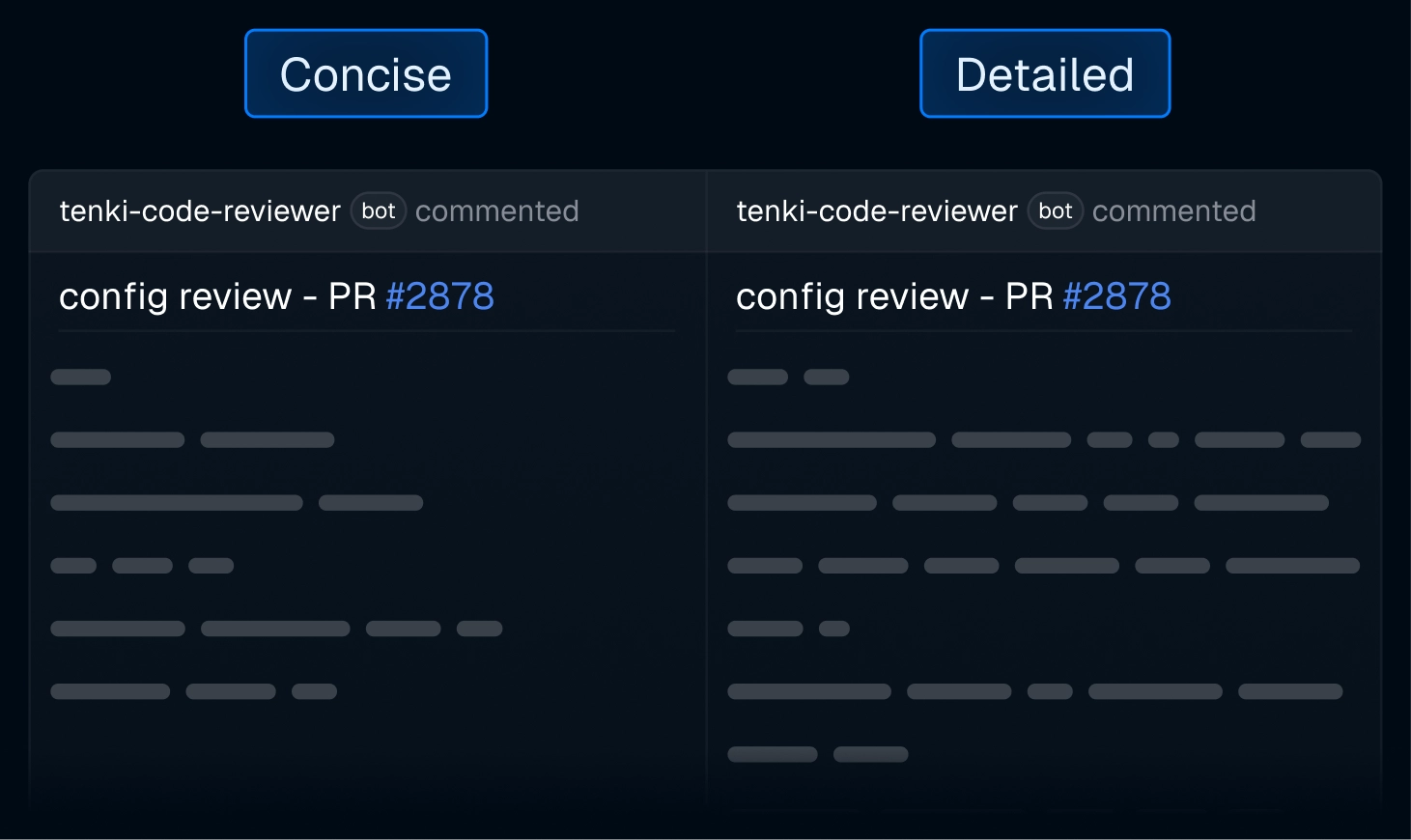
Customize verbosity
Manage the level of detail you want for your code reviews.
Review Anatomy
No frills. Just clear communication.
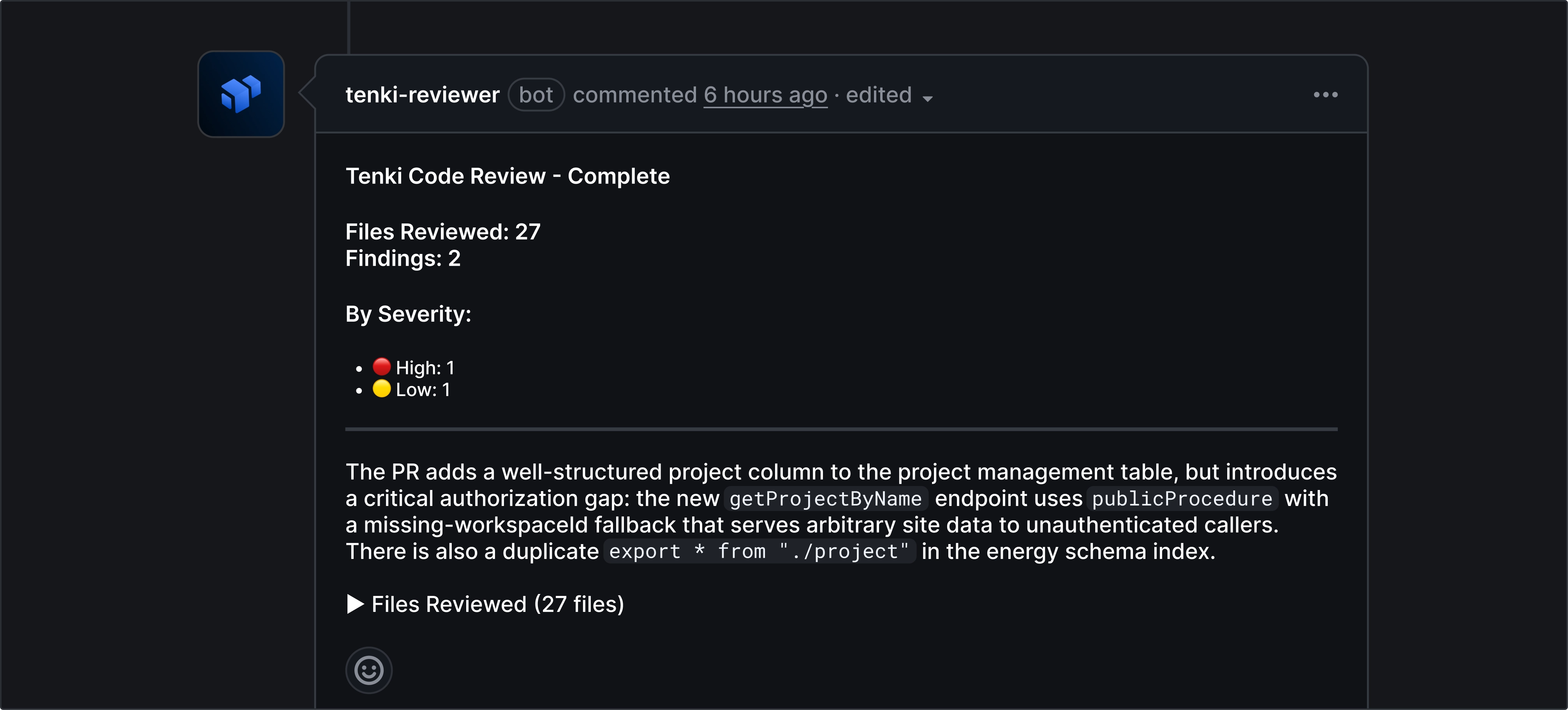
Comment #1
Review status and severity findings
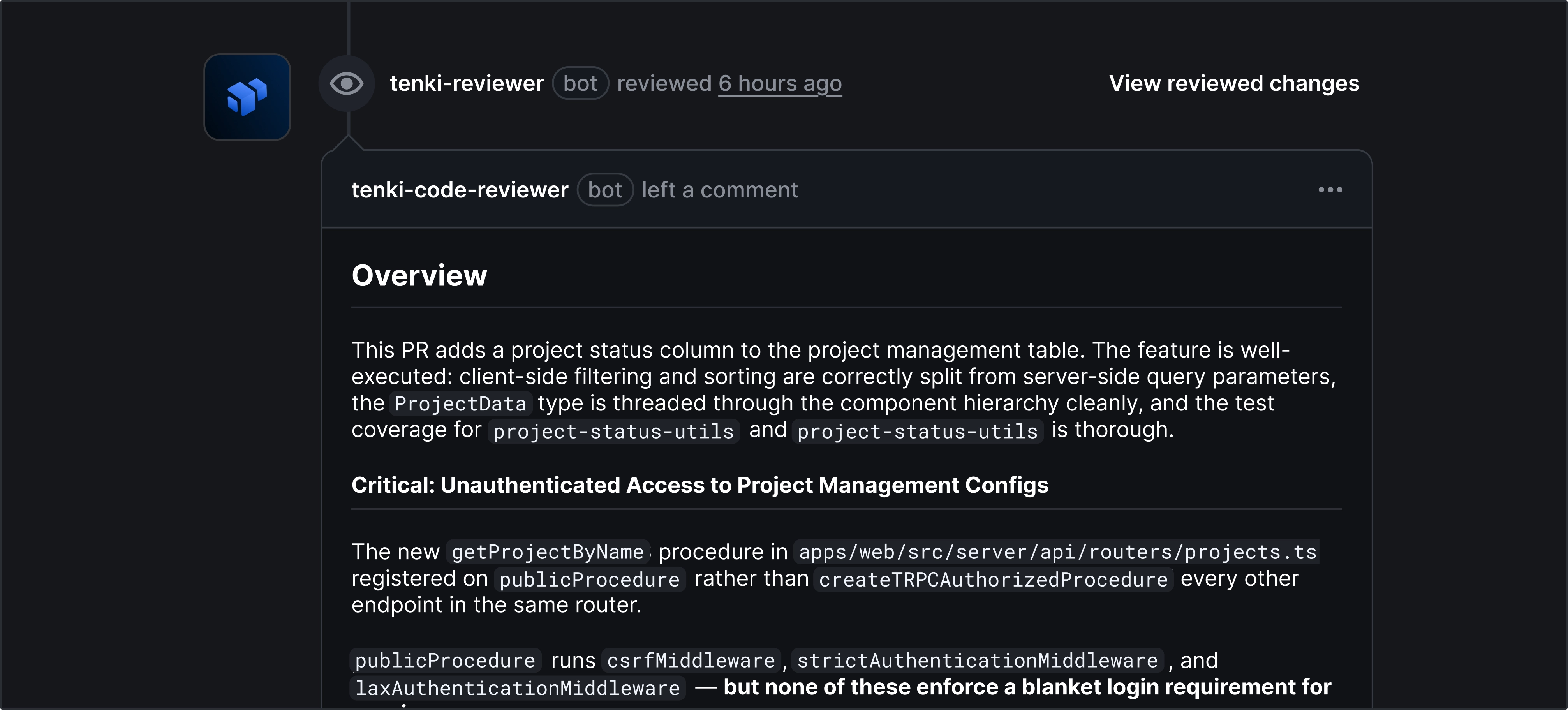
Comment #2
Overview and severity finding breakdowns from critical to low
Testimonials
Don't believe us.
Believe them.
Tenki offers a nice alternative with minimal migration effort. The combination of improved performance and dramatic cost savings makes it worth serious consideration.... I don’t see the point of using GitHub-hosted runners anymore.

Thomas Sanlis
Indie Maker & Founder

Really enjoying the experience with Tenki so far! It feels just like using GitHub Actions with their hosted-runners but only much more affordable. As a bootstrapped startup, the drop in our CI costs has been a huge boost for us!

Arnar Þór Sveinsson
Co-founder & CTO
Been using Tenki for a month now and it's incredible. 2x faster than github and cheaper. But the winner has been excellent support from Hayssem and the team. Highly recommended!

Daniel Donaldson
SWE Manager

We eat our own dogfood here at Luxor. The firmware team switched very early to Tenki to host our collaborative reverse-engineering tools. It's been 100% reliable.

Jan Beck
Head of Firmware

I switched my GitHub Actions to Tenki Cloud in just two minutes: no config changes, no friction. My builds now run faster and cost less thanks to Tenki’s bare metal runners. CI/CD finally feels fast, fair, and affordable.

Ayush Gharat
Founder

Switching to Tenki Cloud runners took seconds and they have been consistent, fast and reliable since day one. No hidden fees and no hassle.

Chris Zeuch
Founder
The transition to Tenki was almost imperceptible. Just a quick config change and everything worked right away. I’ve been using it daily ever since.

Jonatan Dutra
Software QA Engineer
I recently moved my CI/CD pipelines to Tenki Cloud, and the difference has been remarkable. Tenki truly feels built for developers, it's intuitive, transparent, and focused on performance rather than billing complexity.

Malik Anish
DevOps & Cloud Engineer
Tenki has been fantastic so far, super reliable and easy to use. I don’t have any feedback right now because everything just works, but I’ll definitely continue using it and recommend it to others.

Raphael Discky
Software Engineer
Migrating to Tenki was a breeze. It automatically opened a PR to migrate everything, and it just worked perfectly! My workflows have sped up by 2-3x!

BestCodes
Full-stack Developer
I love that Tenki runners are faster than the GitHub ubuntu-latest, and they are 1 million times faster than self-hosted ARC runners on my k3s cluster.

Sandro Marton
DevOps Engineer
I finally had the chance to dive into Tenki, and I’m really impressed. 🚀 The platform is clean, intuitive, and technically solid. Navigation feels seamless, performance is smooth, and the overall UX is highly optimized.

Riya Pathel
Frontend Developer
Tenki offers a nice alternative with minimal migration effort. The combination of improved performance and dramatic cost savings makes it worth serious consideration.... I don’t see the point of using GitHub-hosted runners anymore.
Thomas Sanlis
Indie Maker & Founder
Really enjoying the experience with Tenki so far! It feels just like using GitHub Actions with their hosted-runners but only much more affordable. As a bootstrapped startup, the drop in our CI costs has been a huge boost for us!
Arnar Þór Sveinsson
Co-founder & CTO
Been using Tenki for a month now and it's incredible. 2x faster than github and cheaper. But the winner has been excellent support from Hayssem and the team. Highly recommended!
Daniel Donaldson
SWE Manager
We eat our own dogfood here at Luxor. The firmware team switched very early to Tenki to host our collaborative reverse-engineering tools. It's been 100% reliable.
Jan Beck
Head of Firmware
I switched my GitHub Actions to Tenki Cloud in just two minutes: no config changes, no friction. My builds now run faster and cost less thanks to Tenki’s bare metal runners. CI/CD finally feels fast, fair, and affordable.
Ayush Gharat
Founder
Switching to Tenki Cloud runners took seconds and they have been consistent, fast and reliable since day one. No hidden fees and no hassle.
Chris Zeuch
Founder
The transition to Tenki was almost imperceptible. Just a quick config change and everything worked right away. I’ve been using it daily ever since.
Jonatan Dutra
Software QA Engineer
I recently moved my CI/CD pipelines to Tenki Cloud, and the difference has been remarkable. Tenki truly feels built for developers, it's intuitive, transparent, and focused on performance rather than billing complexity.
Malik Anish
DevOps & Cloud Engineer
Tenki has been fantastic so far, super reliable and easy to use. I don’t have any feedback right now because everything just works, but I’ll definitely continue using it and recommend it to others.
Raphael Discky
Software Engineer
Migrating to Tenki was a breeze. It automatically opened a PR to migrate everything, and it just worked perfectly! My workflows have sped up by 2-3x!
BestCodes
Full-stack Developer
I love that Tenki runners are faster than the GitHub ubuntu-latest, and they are 1 million times faster than self-hosted ARC runners on my k3s cluster.
Sandro Marton
DevOps Engineer
I finally had the chance to dive into Tenki, and I’m really impressed. 🚀 The platform is clean, intuitive, and technically solid. Navigation feels seamless, performance is smooth, and the overall UX is highly optimized.
Riya Pathel
Frontend Developer
FAQs
Questions? Answered!
Have a question we haven't answered?
Reach out to hello@tenki.cloud